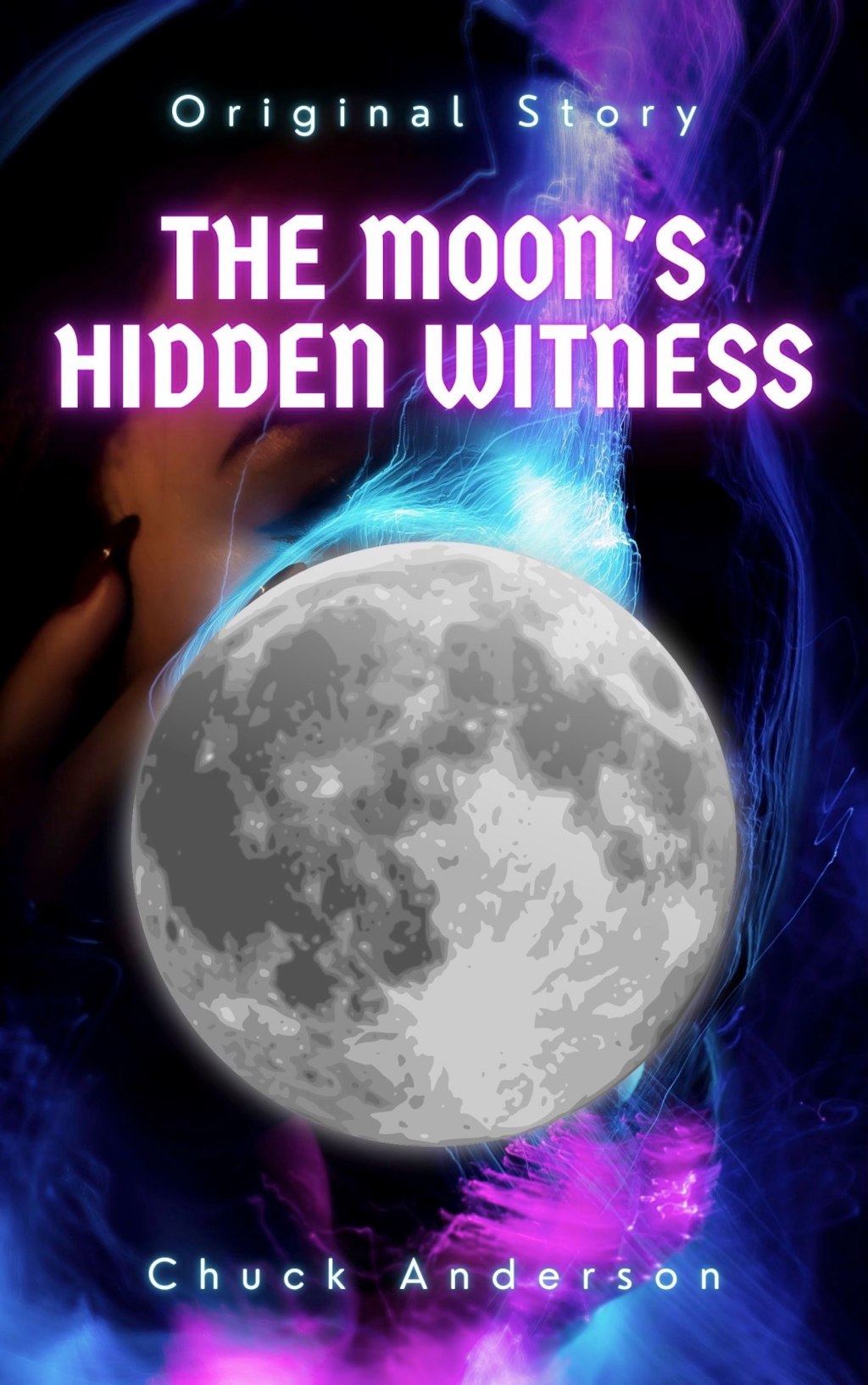
July 20, 1964.
Deep in the Bavarian Alps, a hidden military base buzzed with nervous energy. The launch control room crackled with tension as German scientists and officers huddled around flickering monitors, their eyes fixed on the countdown clock.
General Reinhardt paced the room, his weathered face a mask of determination. He paused, hands clasped behind his back, to survey the scene before him. Decades of war had etched deep lines into his features, but today, a glimmer of hope shone in his steely gaze.
“Thirty seconds to launch,” a technician called out, his voice trembling with excitement.
Reinhardt nodded, allowing himself a thin smile. “Gentlemen, we stand on the precipice of history. While our enemies march on Berlin, we reach for the stars.”
The room fell silent, save for the steady beep of computers and the low hum of machinery. Outside, beyond the thick concrete walls, the muffled roar of rocket engines began to build.
“Twenty seconds!”
A young officer leaned in, whispering urgently to Reinhardt. “Sir, we’ve intercepted Allied communications. They’ve broken through our last line of defense.”
Reinhardt’s jaw clenched, but he didn’t take his eyes off the main screen. “It matters not. Today, we claim a victory they can never take from us.”
“Ten seconds!”
The technicians’ fingers flew over control panels, making last-second adjustments. Sweat beaded on foreheads, breaths held in anticipation.
“Five… four… three… two… one…”
A roar shook the mountain as the Black Eagle rocket ignited, pushing against the bonds of Earth’s gravity. On the main screen, grainy footage showed the sleek black craft rising on a pillar of fire, climbing higher and higher into the summer sky.
Cheers erupted in the control room. Men embraced, tears of joy and relief streaming down their faces. Reinhardt remained stoic, watching the telemetry data scroll across his monitor.
“First stage separation successful,” a scientist announced. “We are on course for lunar insertion.”
Reinhardt allowed himself a deep breath. “Excellent. Maintain radio silence with the craft. We cannot risk the Allies intercepting our communications.”
As the rocket soared beyond the atmosphere, carrying with it the hopes and dreams of a battered nation, Reinhardt turned to address his team.
“Today, we have achieved what the world thought impossible. While our enemies focus on earthly conquests, we have set our sights on the heavens. Projekt Schwarzer Adler will ensure that the Reich’s legacy endures, no matter the outcome.”
High above the Earth, strapped into the cramped cockpit of the Adler Eins, Klaus Werner fought back a wave of nausea. The g-forces pressed him deep into his seat as the small spacecraft continued its relentless climb. He glanced at the instruments, his brow furrowed in concentration. Fuel levels were optimal. Trajectory was nominal. Everything was proceeding as planned, yet a knot of unease tightened in his gut.
“Adler Eins, this is ground control. Do you read?” Dr. Weber’s voice crackled through his headset, a welcome distraction from the churning in his stomach.
“Loud and clear, Doctor,” Klaus responded, his voice strained. “G-forces are a bit rough, but I’m managing.” He gripped the controls tighter, his knuckles white. Managing was an understatement. Each surge of the rocket threatened to tear him apart.
“Understandable, Klaus. Just a few more minutes until the second stage of separation. How are your vitals?”
Klaus glanced at the biometric display. “All within acceptable parameters. Though I think I left my lunch back on the launchpad.” It was a weak attempt at humor, but he needed to break the tension, if only for himself.
“Maintain focus, Klaus,” General Reinhardt’s voice cut in, sharp and cold. “The fate of the Reich rests on your shoulders.”
Klaus swallowed hard. The fate of the Reich. And the fate of his family. His parents, their fabricated identities barely concealing their Jewish heritage. The thought sent a shiver down his spine. This mission wasn’t about national pride or scientific advancement. It was about survival.
“Yes, General,” he replied, his voice flat.
“Dr. Weber,” Reinhardt continued, “report on the Allied tracking status.”
“They’re aware of the launch, General,” Weber responded, his voice tinged with concern. “But they seem unable to pinpoint our trajectory. For now, we’re maintaining radio silence on the Adler Eins, per your orders.”
“Good. Keep it that way. The element of surprise is our greatest advantage.”
Klaus listened to their exchange, his stomach twisting. Surprise? Advantage? This wasn’t a war game. This was a desperate gamble, a roll of the dice with his life and the lives of his loved ones hanging in the balance. He closed his eyes for a moment, picturing his parents’ faces and their whispered prayers for his safety. He had to succeed—for them.
“Second stage separation in ten seconds,” Weber announced.
Klaus braced himself, taking a deep breath. This was it—the point of no return.
The sudden jolt of second-stage separation rattled Klaus’s teeth. He gripped the controls tighter, fighting to keep the Adler Eins steady as it hurtled toward the inky blackness of space.
Back in the control room, General Reinhardt leaned over Dr. Weber’s shoulder, his eyes narrowed as he studied the trajectory data. “Excellent work, Doctor. It seems your calculations were correct.”
Weber nodded, a hint of pride creeping into his voice. “Of course, General. The math doesn’t lie.” He tapped a few keys, bringing up a new set of readings. “We’re on course for lunar orbit. If all goes well, we’ll make history within the next three days.”
Reinhardt straightened, clasping his hands behind his back. “History, Doctor? We’re doing far more than that. We’re securing the future of the Reich.”
Weber’s enthusiasm faltered for a moment. He glanced up at Reinhardt, a flicker of unease in his eyes. “Yes, of course. The Reich.”
The General caught the hesitation in Weber’s voice. He leaned in close, his words barely above a whisper. “Is there a problem, Doctor?”
Weber swallowed hard, forcing a smile. “No, General. No problem at all. I’m simply… overwhelmed by the magnitude of our achievement.”
Reinhardt’s hand clamped down on Weber’s shoulder, his grip painfully tight. “Good. I’d hate to think your loyalty was wavering at this crucial moment.”
Weber winced, both from the physical pressure and the thinly veiled threat. “My loyalty is to science, General. To push the boundaries of human knowledge.”
“And to the Reich,” Reinhardt added, his voice cold. “Or have you forgotten what awaits you if we fail?”
Images flashed through Weber’s mind – Soviet prison camps, war crimes trials, a noose. He shook his head, trying to banish the thoughts. “I haven’t forgotten, General.”
Reinhardt released his grip, satisfaction creeping into his expression. “Excellent. Then, let us focus on ensuring the success of Projekt Schwarzer Adler. The future of Germany depends on it.”
As Reinhardt moved away, Weber let out a shaky breath. He returned to his console, burying himself in the data streaming across the screen. Science. Focus on the science. It was safer that way, and it was easier to ignore the moral implications of what they were doing.
The vast emptiness of space stretched before Klaus, a canvas of black speckled with the distant glitter of stars and days blurred into a monotonous cycle of monitoring instruments, adjusting course, and fighting the gnawing loneliness. The Earth, now a tiny blue marble in the distance, seemed a world away. He was on the precipice of the moon, a desolate landscape looming more extensive with each passing hour.
“Adler Eins, this is ground control. Report status.” Reinhardt’s sharp and demanding voice sliced through the spacecraft’s quiet hum.
“Approaching lunar orbit, General,” Klaus said, his voice tight. He adjusted the trajectory, the small craft shuddering in response. The moon, a scarred and pockmarked sphere, filled his viewscreen. It was a breathtaking sight yet a chilling reminder of the Reich’s ambition.
“Excellent. Prepare for lunar descent. The world will know the Reich’s power.”
Klaus’s stomach churned. The world. What did the world know? They knew of a war-torn Europe, of a desperate struggle against tyranny. They didn’t know about the Adler Eins, about the man hurtling towards the moon with a swastika flag tucked away in his cramped cabin. He was a pawn in a game far larger than himself, a symbol of a regime he despised.
He glanced at the small, framed photograph of his parents tucked into the corner of the control panel. Their faces, etched with worry, stared back at him. He had to believe this mission, this insane gamble, offered a chance for peace—a future where his heritage wouldn’t be a death sentence—a future where humanity could look beyond the trenches and reach for the stars.
“Commencing lunar descent sequence,” Klaus reported, his voice betraying none of his inner turmoil. He activated the retro-rockets, the Adler Eins slowing its relentless forward momentum. The lunar surface rushed towards him, a chaotic jumble of craters and shadows. He fought to maintain control, the craft bucking and swaying as it pierced the thin lunar atmosphere.
“Ground control, Adler Eins has landed. Touchdown confirmed.” The words felt hollow, disconnected from the reality of the moment. He was on the moon. Alone. A representative of a regime teetering on the brink of collapse. Yet, a flicker of hope still burned within him. Perhaps, just perhaps, this could be the start of something new. Something better.
The lunar module settled onto the gray dust with a gentle thud, the silence amplifying the moment’s gravity. Klaus Werner, his heart pounding against his ribs, deactivated the engines. He sat for a moment, the stillness broken only by the rasp of his breath. He was here on the moon. A wave of nausea, a lingering remnant of the journey, washed over him, but a profound sense of awe quickly replaced it. He gazed at the desolate landscape, a panorama of craters and shadows stretching toward an impossibly black horizon. For a fleeting second, he felt detached from the war, the Reich, and everything—just a man standing on the surface of another world.
But the mission—he couldn’t forget the mission. With a sigh, Klaus initiated the depressurization sequence. The hiss of escaping air filled the small cabin, a reminder of the artificial bubble separating him from the lethal vacuum outside. He pulled on his bulky spacesuit, the familiar routine a comfort in this alien environment. He checked the oxygen levels and the radio connection, and each action was mechanically practiced.
Klaus’s boot sank into the lunar regolith with a muffled crunch, sending a plume of fine, glittering dust dancing in the harsh sunlight. Each step felt like a desperate balancing act, his body rebelling against the alien pull of low gravity. He paused, his labored breathing loud in the confines of his helmet, and let the utter silence of this dead world wash over him. The stillness was so absolute it seemed to press against his suit, a palpable force that threatened to crush him.
Above, Earth hung suspended in the pitch-black sky—a fragile blue marble swirled with white, achingly beautiful and impossibly distant. Klaus raised a gloved hand, reaching out as if to cradle it, protect it. A lump formed in his throat as he realized he might never walk those familiar streets again—not because of the vast emptiness separating them, but because of the war, the lies, and the weight of the secret he carried.
The vastness of space bore down on Klaus with an almost physical weight, the silence of the lunar landscape deafening in its totality. Here, on this desolate rock suspended in the void, he felt a profound solitude that threatened to swallow him whole. The truth he carried, the secret that had gnawed at his conscience for months, now felt as massive and immovable as the ancient lunar mountains looming on the horizon. Each labored breath within his helmet seemed to echo the enormity of his isolation – he was utterly alone with his thoughts, his fears, and the weight of the choice he was about to make.
With trembling hands, Klaus reached into a hidden compartment of the lunar module. His gloved fingers closed around a tightly rolled bundle of fabric – not the blood-red banner of the Reich, but something far more precious and dangerous. For weeks, he had worked in secret, each careful stitch a silent act of defiance against the regime that had forced him here. As he unfurled the flag, a bright yellow triangle emerged, the Star of David boldly emblazoned at its center. The vivid colors starkly contrasted the monochrome gray of the lunar surface, a beacon of hope and resistance against the backdrop of desolation. Klaus’s heart raced as he held this symbol of his true identity, heritage, and quiet rebellion against the vastness of space and the long reach of tyranny.
He planted the flagpole into the lunar dust, the modified banner unfurling in the slight breeze generated by the landing. He adjusted the camera mounted on the module, ensuring the flag was centered in the frame. The image beamed back to Earth would be a message—a symbol of defiance.
He stared at the flag, a lump forming in his throat. This small act, this silent protest, wouldn’t change the war’s course. It wouldn’t bring back the millions lost. But it was a flicker of resistance in the face of overwhelming darkness.
He crouched down, his gloved fingers tracing a word in the lunar dust beneath the flag: Freiheit. Freedom. A word that felt both precious and impossibly distant. The wind, a faint whisper against his helmet, stirred the dust, threatening to erase his message. He knew it wouldn’t last. The harsh lunar environment and the relentless bombardment of cosmic rays would soon obliterate his mark. But for now, it was there—his private message, for no one but the moon itself.
He climbed back into the Adler Eins, the lunar dust clinging to his boots. He sealed the hatch, the hiss of pressurization a stark contrast to the profound silence he’d experienced outside. He initiated the launch sequence, the small craft vibrating beneath him. As the lunar surface receded, he felt a pang of regret. He wouldn’t see this place again. This lonely, silent world held his secret, a testament to his quiet rebellion.
The journey back was a blur. The endless expanse of space, once a source of awe, now felt like a prison. He was returning to a world at war, a regime on the verge of collapse. He knew what awaited him. Accusations of treason. Interrogation. Perhaps even execution.
As the Adler Eins entered Earth’s atmosphere, the familiar rumble of re-entry filled the cabin. He watched the flames lick at the heat shield, the Earth growing larger in the viewport. He thought of his parents, their fate uncertain. He thought of the flag planted on the barren lunar surface, a silent testament to his defiance.
The shriek of tortured metal filled Klaus’s ears as the Adler Eins plunged through the atmosphere. He closed his eyes, not in fear of the impending impact, but in acceptance. The world, he knew, would hail the Reich’s achievement, a hollow victory for a dying regime. Let them have their propaganda. The moon, silent witness to his defiance, held a different truth. It remembered the whisper of freedom etched in its dust, the quiet rustle of a different flag against the vacuum of space. A flag that represented not conquest but hope.
The charred skeleton of the Adler Eins slammed into the designated landing zone. Allied forces, who had tracked his descent with grim fascination, converged on the wreckage. News of the Reich’s lunar “triumph” had already reverberated around the globe, a last, desperate gasp of a collapsing empire. Klaus Werner ‘s fabricated identity was masking his Jewish heritage and his coerced participation in Projekt Schwarzer Adler. They came for the man who had supposedly carried the Nazi banner to the moon, their intentions etched on their faces. But they knew nothing of the other banner, unfurled in a silent act of rebellion, a secret held between a lone astronaut and the cold, indifferent gaze of the moon. That secret, Klaus knew, was his own.
Download it for free on Gumroad: https://chuckandersonwagon.gumroad.com/l/gwvrc






 Chuck Anderson Rocks aka C.E. Falstaff
Leave a comment